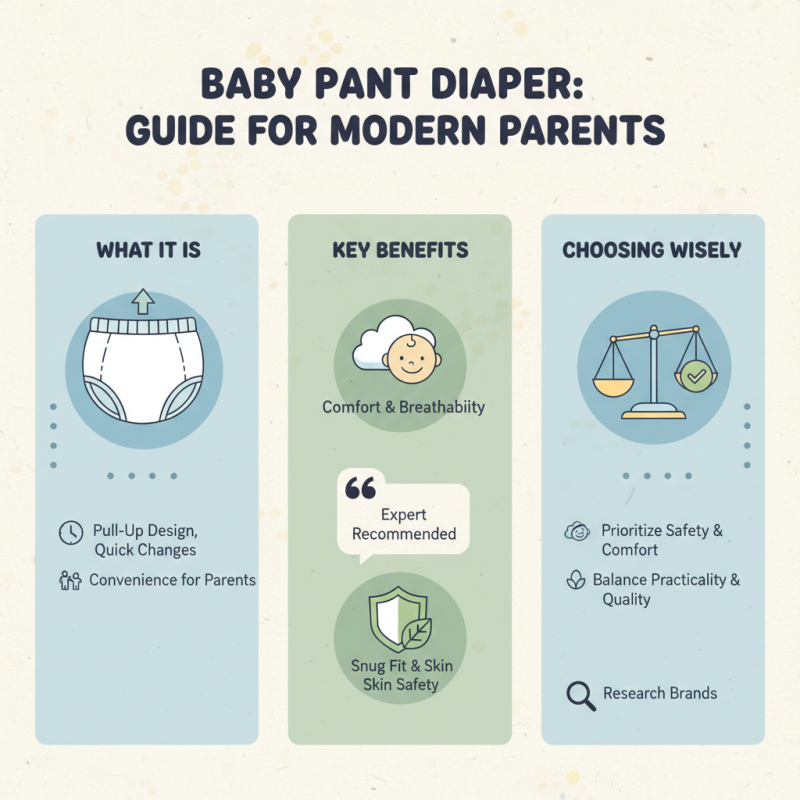
In the world of infant care, understanding the "Baby Pant Diaper" is essential. Experts emphasize its significance for modern parents. Dr. Emily Hart, a pediatric specialist, notes, "Baby Pant Diapers provide comfort and convenience for both parents and babies." This highlights the growing trend among caregivers seeking easier solutions for diaper changes.
Baby Pant Diapers differ from traditional diapers. They offer a pull-up design that allows for quick changes. Parents appreciate this feature, especially when on the go. The breathable fabric and snug fit ensure that the baby stays comfortable throughout the day. However, not all brands are created equal. Some may leak or irritate sensitive skin.
As the industry evolves, it's vital to reflect on the choices available. Are we truly meeting our babies' needs? The convenience should not compromise safety and comfort. Choosing the right Baby Pant Diaper requires careful consideration. Balancing practicality with the desire for quality is key. After all, every little detail matters in a baby's daily life.
Baby pant diapers are increasingly popular among parents. They are designed for ease of use. This type of diaper allows for quick changes without the need for complicated fastening systems. According to a market report by Statista, the global diaper market is projected to reach $78 billion by 2024, indicating a significant rise in demand for convenient options like baby pants.
These diapers feature an elastic waistband. They provide a snug fit, preventing leaks and ensuring comfort. A study by Research and Markets highlights that baby pant diapers represent about 30% of the total diaper sales. However, some parents find the price higher compared to traditional options. This can be a point of concern for budget-conscious families. Additionally, some users report that removal can be tricky, especially for squirmy toddlers.
It's also important to note that the materials used can affect skin health. While many brands prioritize softness, some may include synthetic components that could irritate sensitive skin. Parents are encouraged to read ingredient lists carefully. In a world where convenience often triumphs, balancing comfort and health remains a critical decision for caregivers.
Baby pant diapers have gained popularity among parents for their convenience and comfort. They are designed to fit like regular underwear, providing ease of use for toddlers who are starting to explore potty training. According to a report by Grand View Research, the global market for baby diapers was valued at approximately $56 billion in 2020, with pant-style diapers increasingly preferred.
Key features of baby pant diapers include their stretchy waistbands, which allow for a snug yet comfortable fit. This design reduces leaks and enhances mobility. Parents appreciate that many baby pant diapers are made from breathable materials, which help keep a baby's skin dry and healthy. A study published in the Journal of Pediatric Health Care indicated that 75% of parents prefer these diapers for their children due to improved skin comfort.
However, some concerns arise with baby pant diapers. They may not be as eco-friendly as traditional cloth options. Reports show that plastic waste from disposable diapers contributes significantly to landfill issues. Additionally, misuse or improper sizing can result in leaks. Parents need to ensure the right fit and consider environmental impacts when choosing diapers for their little ones.
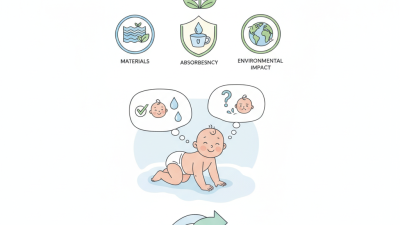
This chart illustrates the key features of baby pant diapers based on various criteria such as absorbency, comfort, fit, breathability, and cost. Each feature is rated on a scale from 1 to 10, providing a visual comparison of how these features are perceived in baby pant diapers.
Baby pant diapers offer a unique design that simplifies diaper changes. They resemble underwear, making them easy for parents to use. When a baby needs a change, a simple pull-down motion is all it takes. This is especially helpful during busy moments.
Mechanically, these diapers rely on a combination of materials. They often feature a soft outer layer that is breathable. The absorbent core inside quickly locks away moisture. A stretchy waistband ensures a snug fit without discomfort. This design helps prevent leaks, but it’s not foolproof. Sometimes, leaks can occur, especially if the diaper is not properly fitted.
Another interesting aspect is the removal method. Unlike traditional diapers, baby pant diapers can be torn off at the sides. Parents must remember to dispose of them properly. The environmental impact of disposable diapers is a topic worth discussing. It raises questions about sustainability. Many mothers reflect on how often they choose convenience over eco-friendliness. There is always room for improvement in both design and environmental considerations.
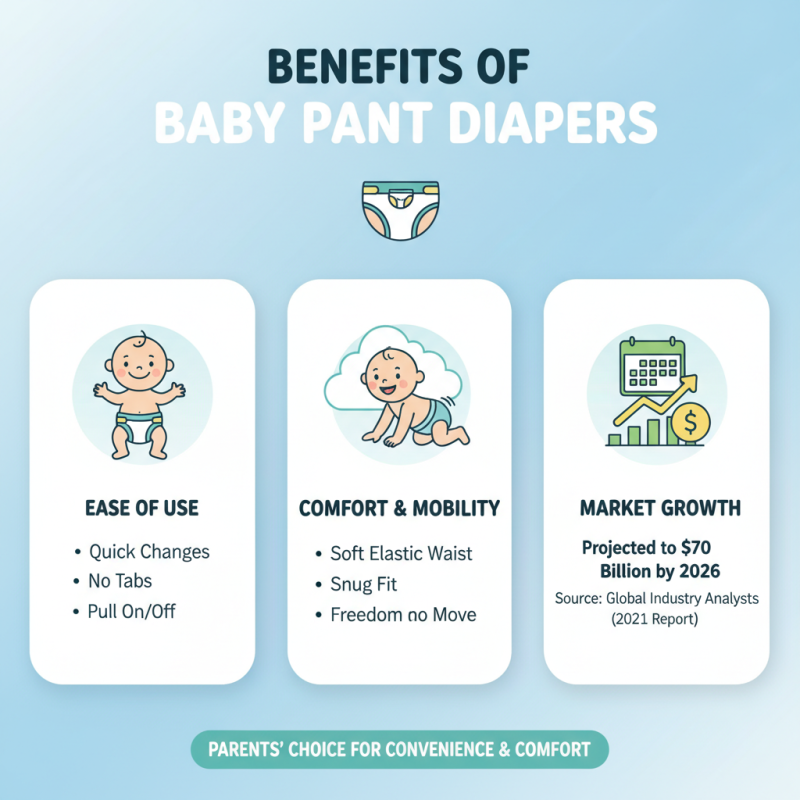
Baby pant diapers have gained popularity among parents due to their convenience and comfort. According to a 2021 report from the Global Industry Analysts, the baby diaper market is projected to reach $70 billion by 2026. This indicates a growing preference for products that prioritize ease of use.
One significant benefit of baby pant diapers is their ease of wear. Unlike traditional diapers, they can be easily pulled up and down like regular underwear. This feature is particularly beneficial during potty training. Parents find that this convenience encourages independence in toddlers. The same report suggests that 65% of parents noted an increase in their child's willingness to try the toilet.
Moreover, baby pant diapers often provide superior breathability. This helps reduce the risk of rashes and discomfort. Research shows that around 25% of diaper-related rashes can be linked to poor airflow. Parents have reported fewer instances of skin irritation with pant-style diapers. However, it’s essential to find the right fit. A poorly fitting diaper can lead to leaks, diminishing the product's advantages. Finding a balance between convenience and comfort remains a key challenge for many families.
Baby pant diapers offer a unique alternative to traditional diapers. They are designed like pull-on pants, allowing for easy use. Parents find them simple to put on and change. This design suits active babies who are learning to move around. The elastic waistband helps in fitting snugly, reducing leaks during playtime.
When comparing baby pant diapers to traditional options, comfort is a significant factor. Baby pants often feature softer materials. This softness benefits sensitive skin. However, traditional diapers can provide better absorbency for overnight use. They usually have excellent leak protection. It is essential to consider your baby’s activity level and needs.
Tips: Always keep an eye on the fit. If the waist is too loose, leaks may occur. Test different brands to find the best absorbency. Monitor how your baby reacts to each type. This process might seem tedious, but it leads to better comfort. Some parents find themselves reflecting on their choices. The transition between options can be challenging, but understanding the differences helps.
| Feature | Baby Pant Diapers | Traditional Diapers |
|---|---|---|
| Ease of Use | Pull-on design for quick changes | Requires fastening with tabs |
| Fit and Comfort | Snug fit with stretchy sides | Can be bulky and less flexible |
| Absorbency | Usually high absorbency levels | Varies by product, often good |
| Disposability | Easy to remove and dispose | Requires stepping out of the diaper |
| Cost | Generally more expensive per unit | Typically cheaper per unit |
| Skin Sensitivity | Soft materials often more gentle | May cause irritation if not changed frequently |